
You have been successfully logged out.
Gilead-Kite is committed to ensuring rapid and reliable delivery of YESCARTA® to patients across the UK and working closely with clinical teams to develop efficient, patient-centered pathways that can help achieve optimal outcomes for patients6–13
YESCARTA® manufacturing and delivery
Gilead-Kite's 98% real-world manufacturing success rate for YESCARTA® in the UK can help patients avoid the need for repeat leukaphereses, while benefiting from flexible support to help plan for lymphodepletion and treatment administration6–8
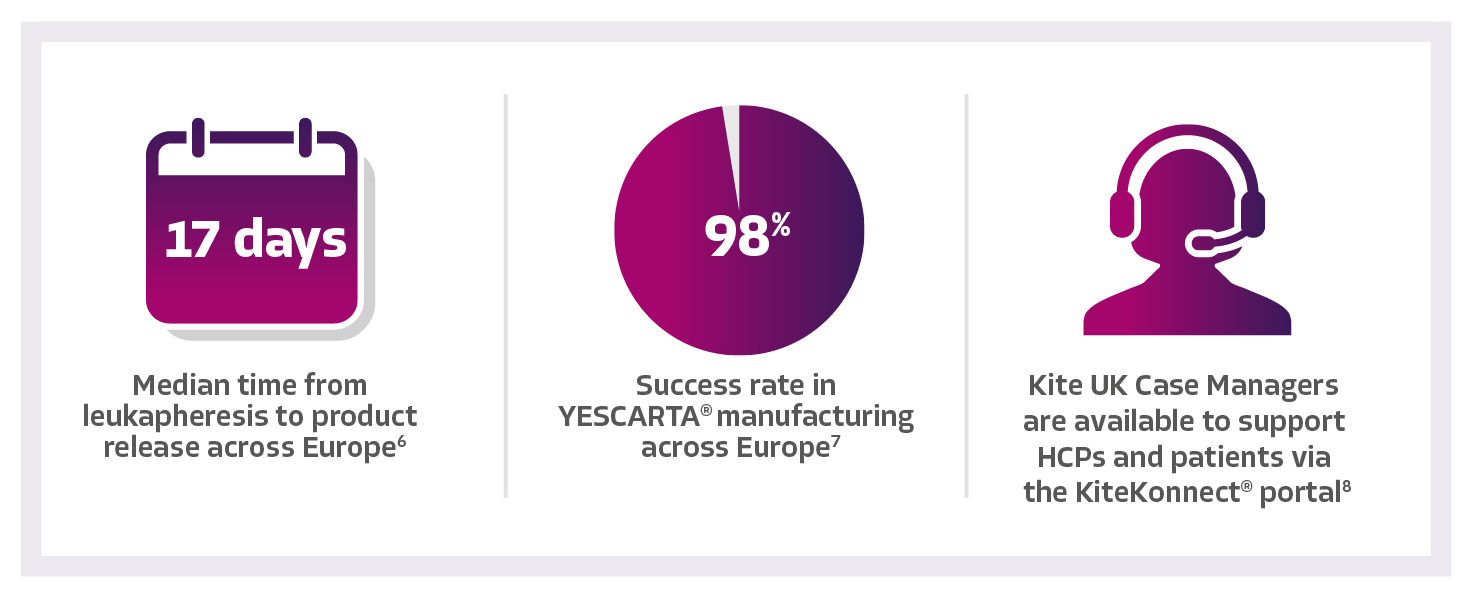
Gilead-Kite have CAR T manufacturing facilities in Europe and treatment centres across the UK and Ireland, ensuring timely access and expedited treatment delivery9,10
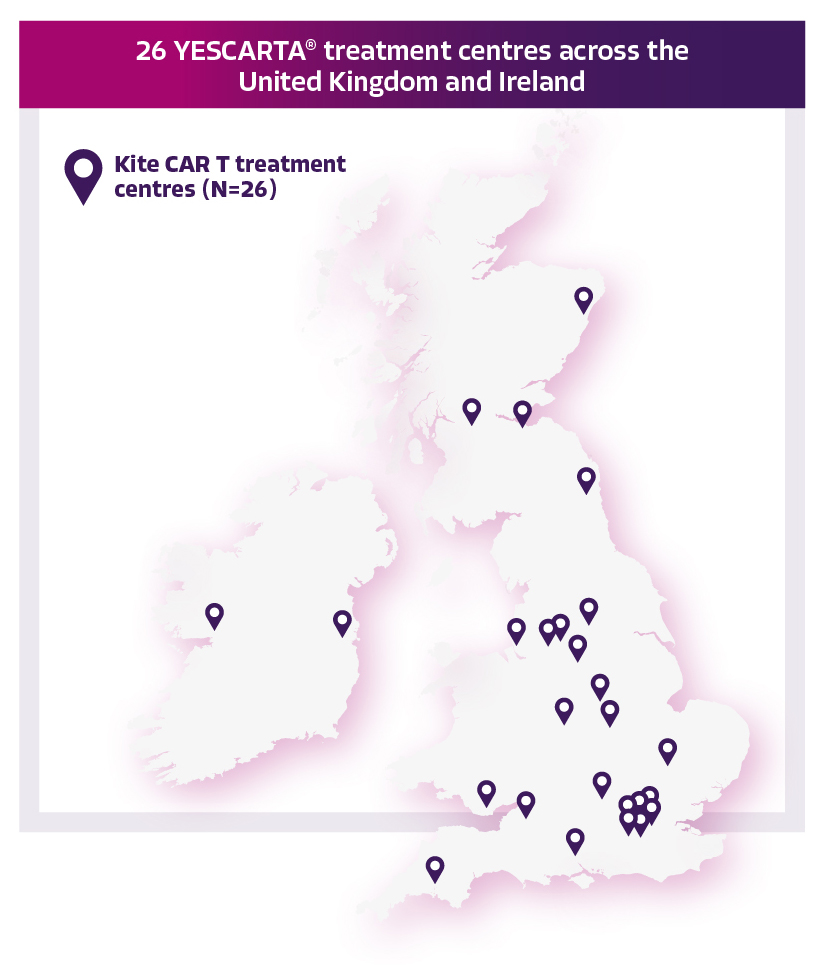
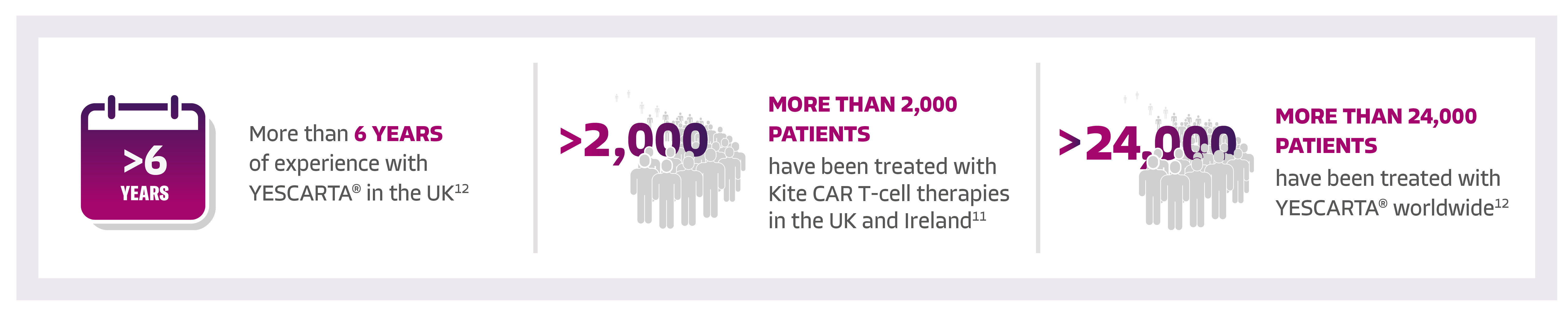
Gilead-Kite combine world-class capabilities in CAR T-cell manufacturing and treatment delivery with years of hands-on experience in the UK healthcare landscape6–13
An efficient patient pathway and faster turnaround times between patient identification, leukapheresis and infusion (B2V and V2V time) can reduce time to treatment, which may be associated with improved survival outcomes for patients1–5
Brain-to-vein time: time from intent to CAR T-cell to apheresis
An efficient patient pathway with early patient identification reduces the chance of patients experiencing progression and drop-out prior to CAR T infusion1–5

In a retrospective analysis, the mOS in patients with 3L+ R/R LBCL treated with CAR T-cell therapy was shown to more than double with a shorter B2V time2
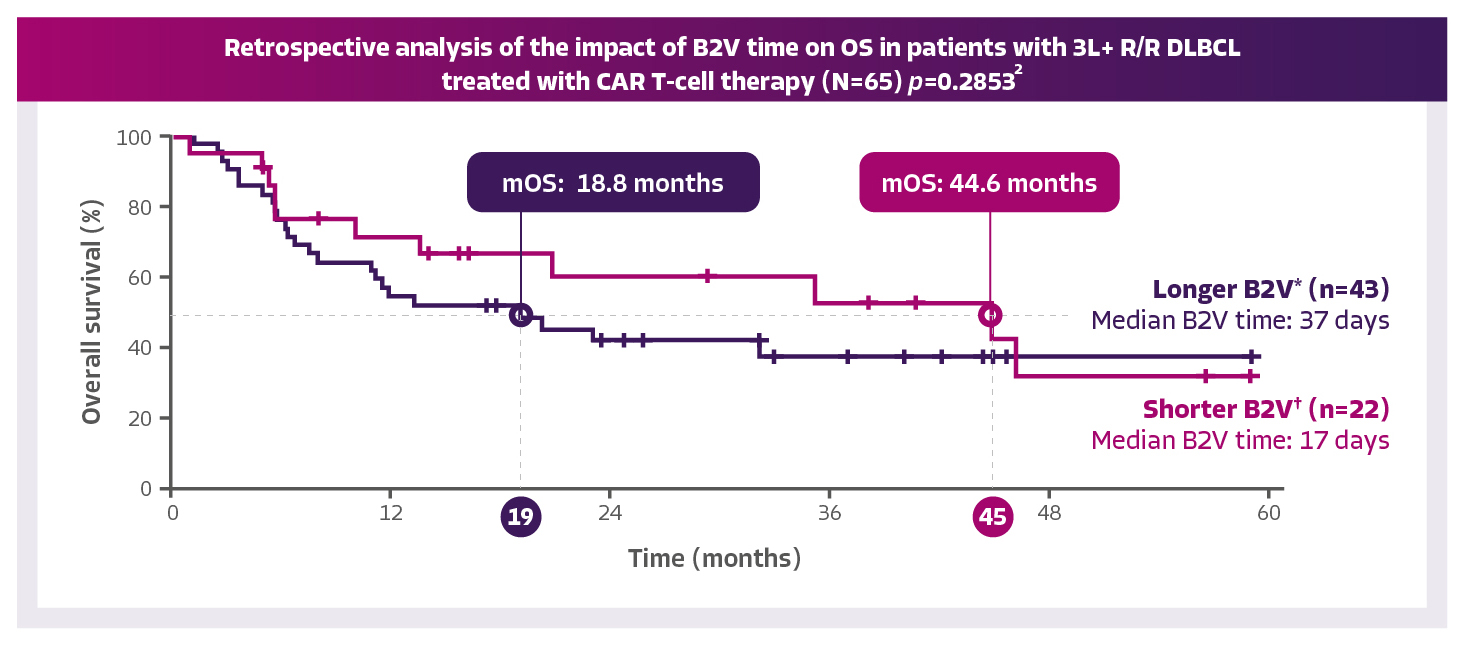
Median follow-up: 29.5 months
Adapted from Gromowsky M, et al. 2023.2
* Based on cohort of patients with Single Case Agreements (i.e with private insurance or Medicare with a managed plan);
† Based on cohort of patients without Single Case Agreements (i.e. with public insurance or Medicare with supplement).
A single-centre, retrospective study analysing the impact of B2V time on OS in patients with 3L+ R/R DLBCL treated with CAR T-cell therapy and between 2018 and 20222
Vein-to-vein time: time from T-cell collection to CAR T infusion
A real-world analysis of patients treated with YESCARTA® demonstrated improved outcomes with shorter V2V times3
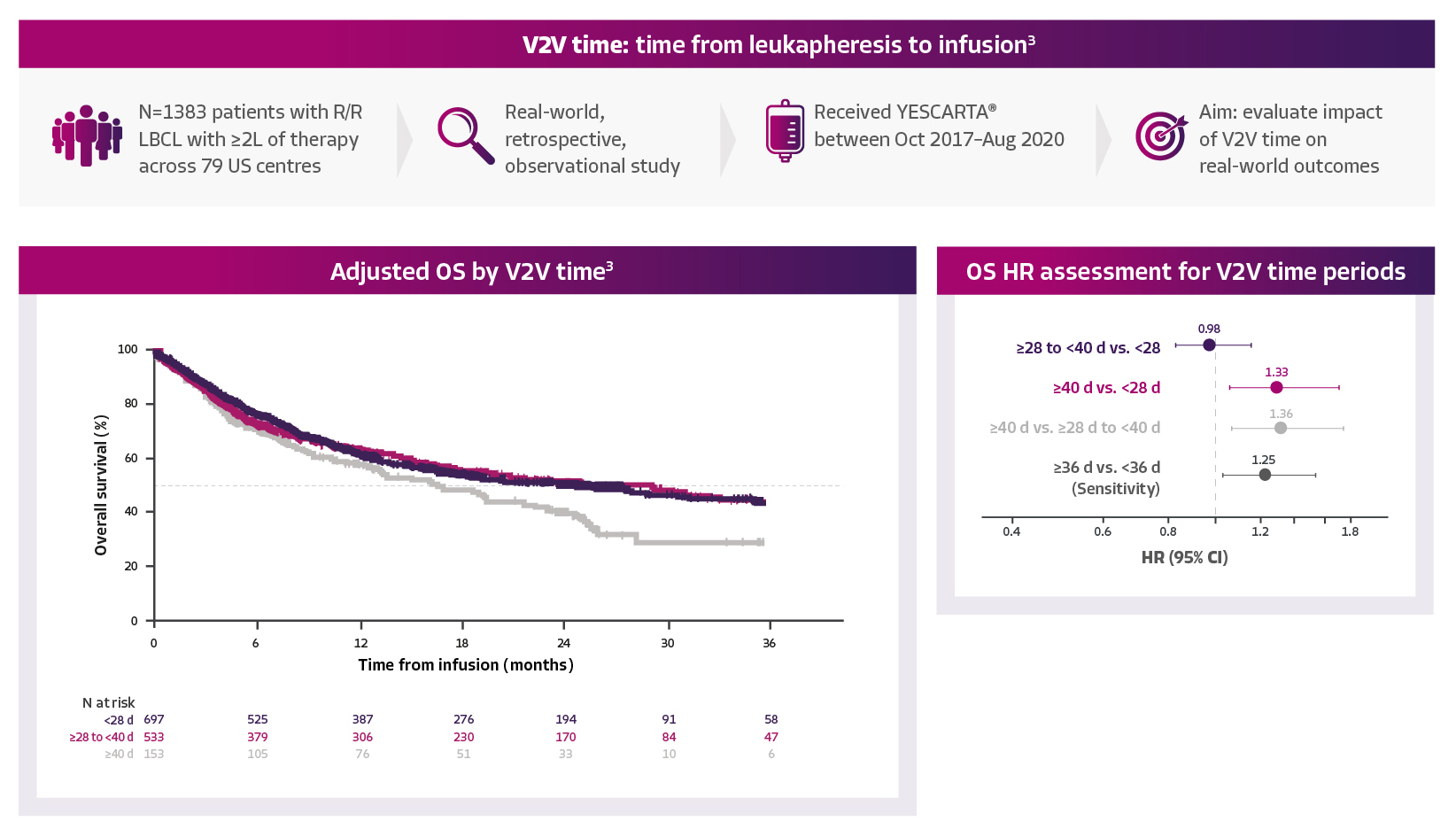
Median follow-up: 24.2 months
Adapted from Locke FL, et al. 2022.3
Patients treated with YESCARTA® with a V2V time of ≥40 days had significantly lower CR rates than those with a V2V time of <28 days (OR, 0.61) or ≥28 to <40 days (OR, 0.66), and significantly lower OS than those with a V2V time <28 days (HR, 1.33) or ≥28 to <40 days (HR, 1.36)3
The impact of V2V times in patients with R/R LBCL treated with YESCARTA®, KYMRIAH® (tisagenlecleucel) and BREYANZI® (lisocabtagene maraleucel), was evaluated via a SLR and a meta-analysis of patients treated with YESCARTA® enrolled in a study using CIBMTR data3
Early referral may lead to better outcomes. Visit our Identifying a patient page to learn more about patient eligibility, identification support and treatment guidelines. Refer your patients for CAR T without delay.
2L, second-line; 3L, third-line; ATC, authorised treatment centre; B2V, brain-to-vein; CAR T, chimeric antigen receptor T-cell; CI, confidence interval; CIBMTR, Center for International Blood and Marrow Transplant Research; CTIQ, cellular therapy intent quotient; d, days; DLBCL, diffuse large B-cell lymphoma; HR, hazard ratio; ICANS, immune effector cell-associated neurotoxicity syndrome; iCART, intent to CAR T; L, line; LBCL, large B-cell lymphoma; (m)OS, median overall survival; OR, odds ratio; PASS, Post-Authorization Safety Study; R/R, relapsed or refractory; SLR, systematic literature review; UK, United Kingdom; V2V, vein-to-vein.
January 2026 | UKI-YES-0316