
You have been successfully logged out.
YESCARTA® safety outcomes in the ZUMA-7 study
Safety outcomes with YESCARTA® in ZUMA-7 were broadly consistent with other studies of intensive treatment for patients with R/R DLBCL, with toxicity rates being as expected and adverse events generally manageable1–3
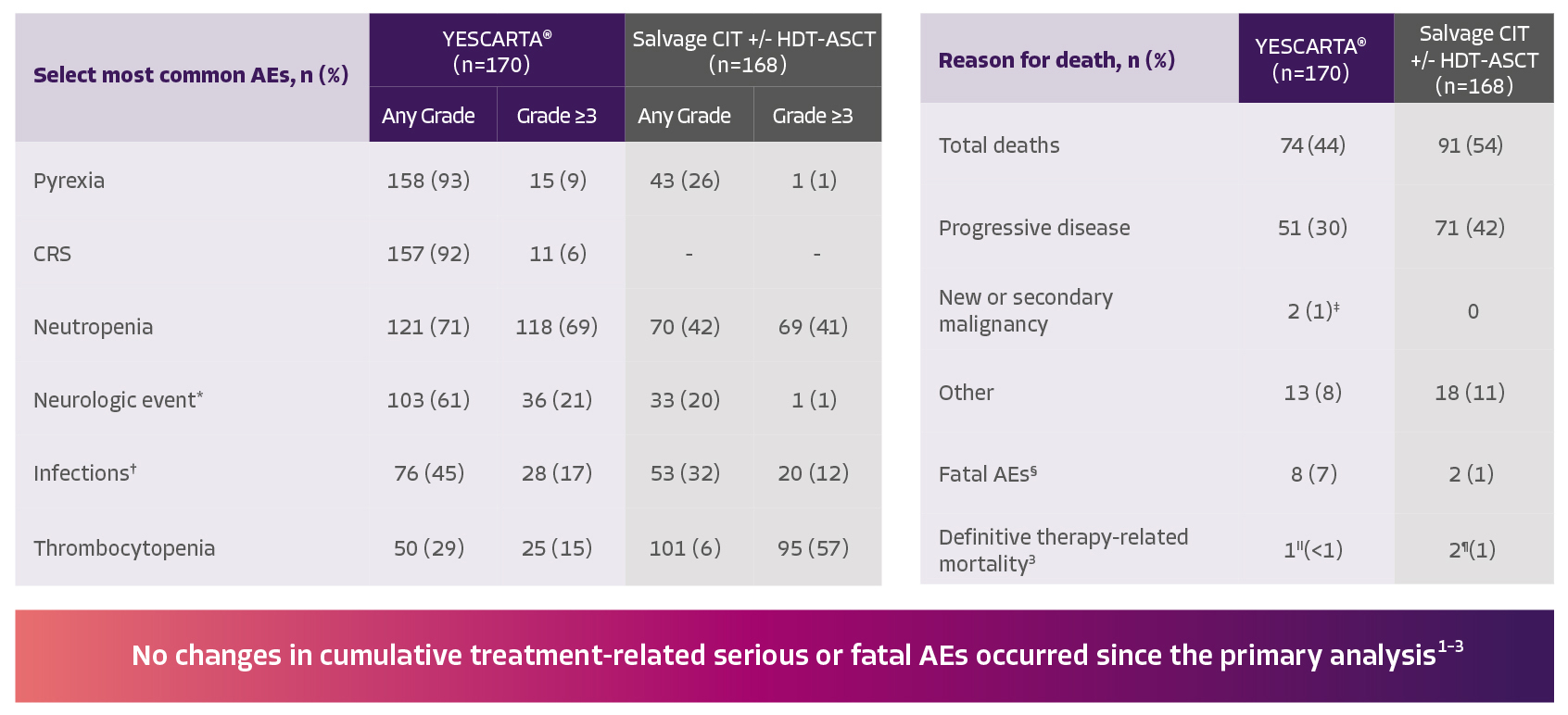
Median follow-up: 47.2 months
Adapted from Westin JR, et al. 2023.1
* Includes tremor, confusional state, aphasia, encephalopathy, paresthesia, and delirium; † Includes bacterial, opportunistic, viral, COVID-19, and unspecified infections; ‡ One patient died of AML and one died of lung adenocarcinoma, both deemed unrelated to study treatment per investigator assessment; ‡ Includes fatal AEs that occured outside of the protocol-specified AE reporting window; § Includes COVID-19, sepsis, acute respiratory distress syndrome, cardiac arrest, hepatitis B reactivation, myocardial infarction, pneumonia, and progressive multifocal leukoencephalopathy; II YESCARTA®-treated: Hepatitis B reactivation (n=1); ¶ ASCT-treated; Cardiac arrest and acute respiratory distress syndrome (n=1 each).1,3
YESCARTA® treatment led to generally manageable rates of CRS and neurologic toxicities in ZUMA-7, with all events resolved during the study1,2
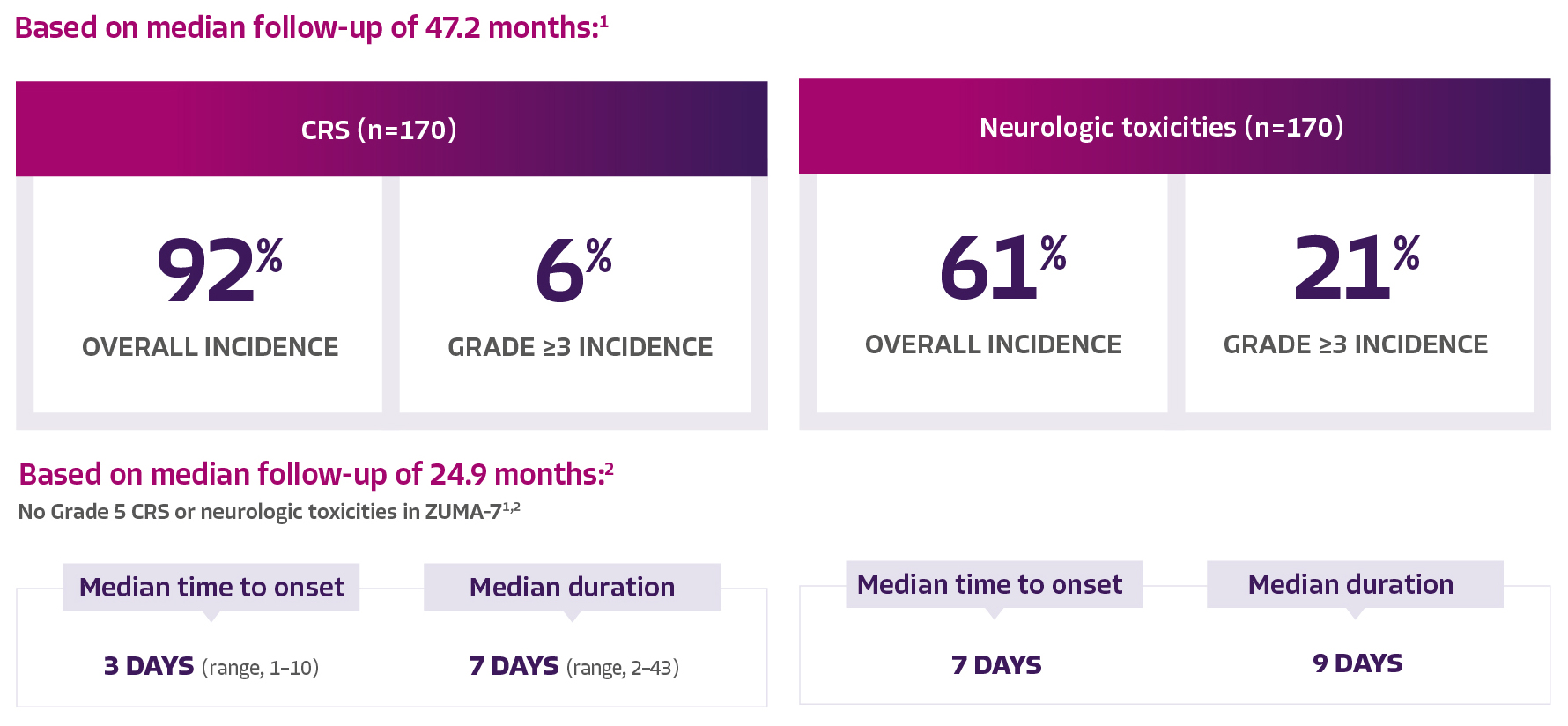
Click on the Real-world evidence tab above to see how clinical study outcomes compare to the real world
Study overview and baseline characteristics
ZUMA-7 was a phase 3, randomised, open-label, multicentre, pivotal study in 359 adult patients with 2L R/R DLBCL. Patients were randomised 1:1 to YESCARTA® (n=180) or salvage CIT +/- HDT-ASCT (n=179)1,2
Study design and baseline characteristics
YESCARTA® safety outcomes in the ZUMA-1 study
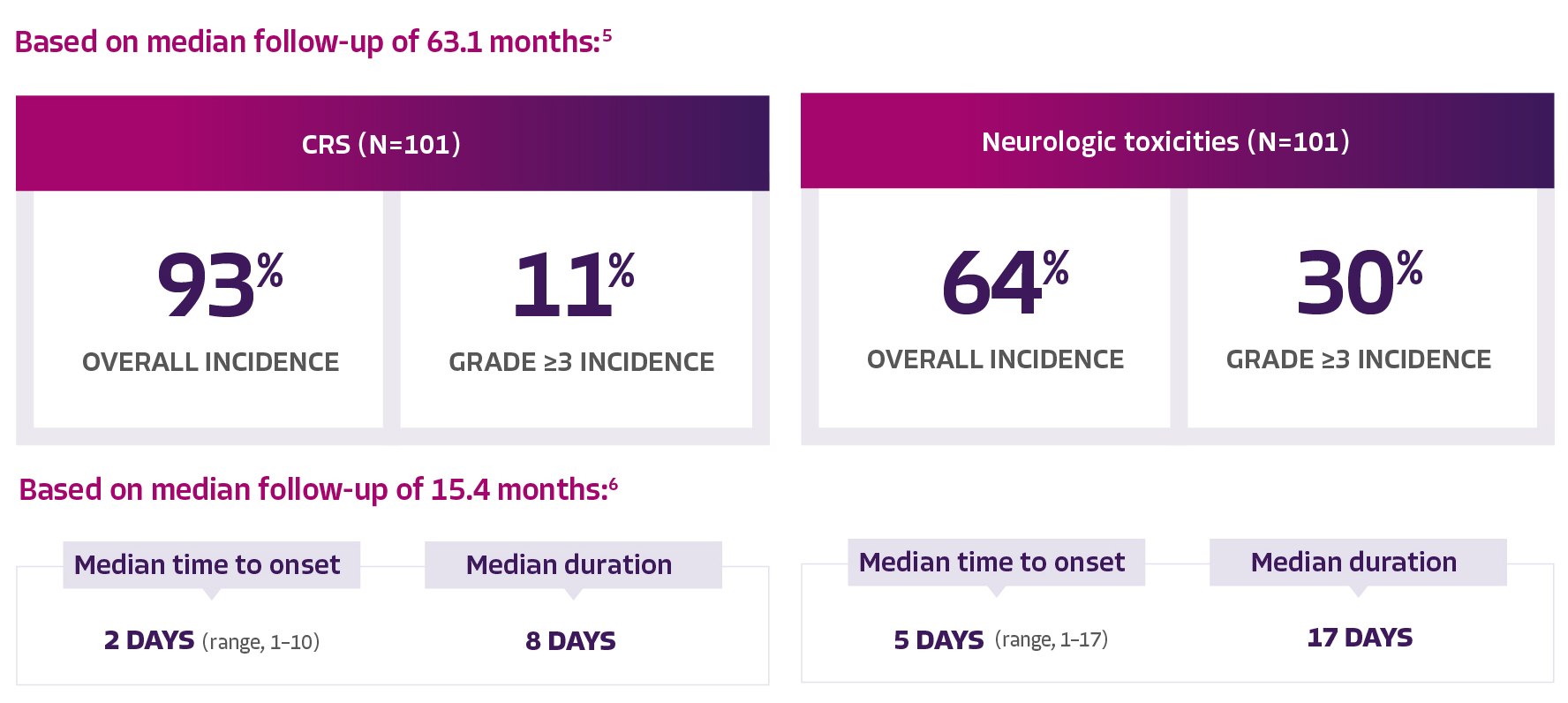
The safety profile of YESCARTA® was shown to be generally manageable based on the primary analyses of ZUMA-1 (median follow-up: 15.4 months) and remained consistent over five years of follow-up4–6
YESCARTA® treatment led to generally manageable rates of CRS and neurologic toxicities in ZUMA-1, with most events resolved during the study period. Rates of CRS and ICANS decreased over the course of the study4–6
Study overview and baseline characteristics
ZUMA-1 is a phase 1/2, single-arm, multicentre study in 101 adult patients with 3L R/R DLBCL assessing the safety and efficacy of YESCARTA®4-6
Study design and baseline characteristics
YESCARTA® safety outcomes in the real world
Real-world analyses with YESCARTA® have demonstrated safety outcomes comparable to those seen in key clinical studies in a broader patient population, in both the 2L and 3L+ settings1,5,7,8
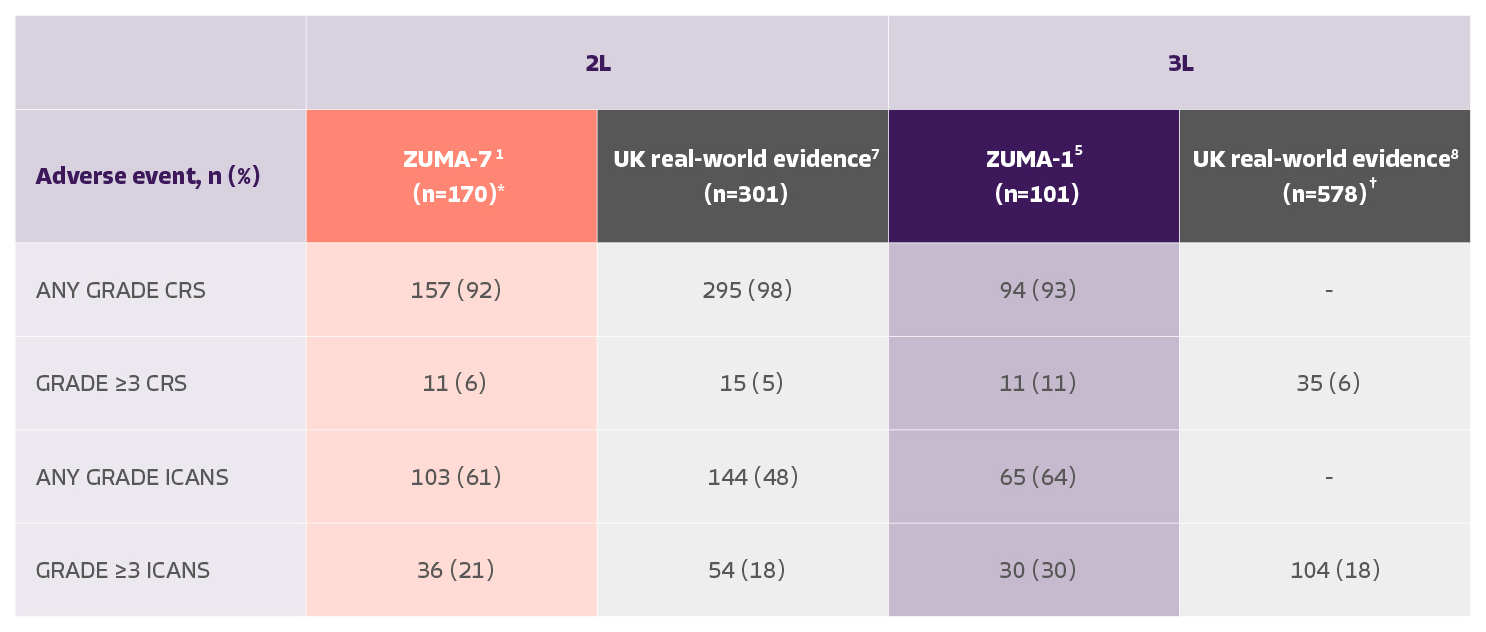
* No grade 5 CRS or neurological events were reported in the YESCARTA® arm of ZUMA-7;1,2† Includes YESCARTA®-infused patients with available data across both Era 1 (2018–2019, n=171) and Era 2 (2020–2022, n=407).8
The evolution and increased use of adverse event management strategies has resulted in reduced rates of high-grade CRS and ICANS, compared with those reported in ZUMA-1 and ZUMA-71,5,7,8
Real-world survival outcomes with YESCARTA® are similar to those in ZUMA-7 even though a broader patient population were treated. In the real-world setting, patients had:1,2,7
Study overview and baseline characteristics
UK 2024 real-world evidence: a multicentre, real-world study of 2L YESCARTA® in 195 patients with R/R LBCL7
UK 2023 real-world evidence: a multicentre, real-world study of ≥3L YESCARTA® or tisagenlecleucel in 726 patients with R/R LBCL across 12 UK CAR T centres8
Baseline characteristics
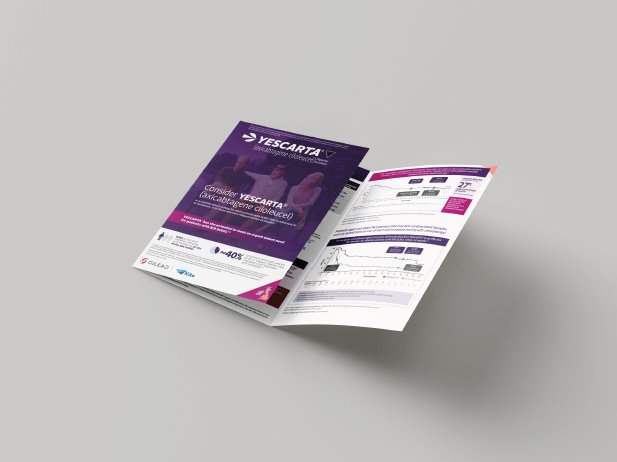
Visit our Resources page to download your free brochure to get a comprehensive overview of the treatment – including key efficacy and safety data from both clinical trials and real-world studies, so you can make an informed decision with confidence.
1L, first-line; 2L, second-line; 3L, third-line; AE, adverse event; CAR T, chimeric antigen receptor T-cell; CIT, chemoimmunotherapy; COVID-19, coronavirus disease; CRS, cytokine release syndrome; DLBCL, diffuse large B-cell lymphoma; EFS, event-free survival; HDT-ASCT, high-dose therapy and autologous stem cell transplantation; ICANS, immune effector cell-associated neurotoxicity syndrome; IPI, International Prognostic Index; LBCL, large B-cell lymphoma; LDH, lactate dehydrogenase; NR, not reached; ORR, overall response rate; OS, overall survival; R/R, relapsed or refractory; UK, United Kingdom.
January 2026 UKI-YES-0315