
You have been successfully logged out.
Treatment guidelines for CAR T-cell therapy in R/R LBCL
BSH now recommend CAR T-cell therapy, including YESCARTA®, as a standard of care for eligible patients with R/R LBCL that relapse within 12 months of 1L CIT, and as 3L therapy in patients who relapse beyond 12 months of 1L CIT who did not receive CAR T as 2L1
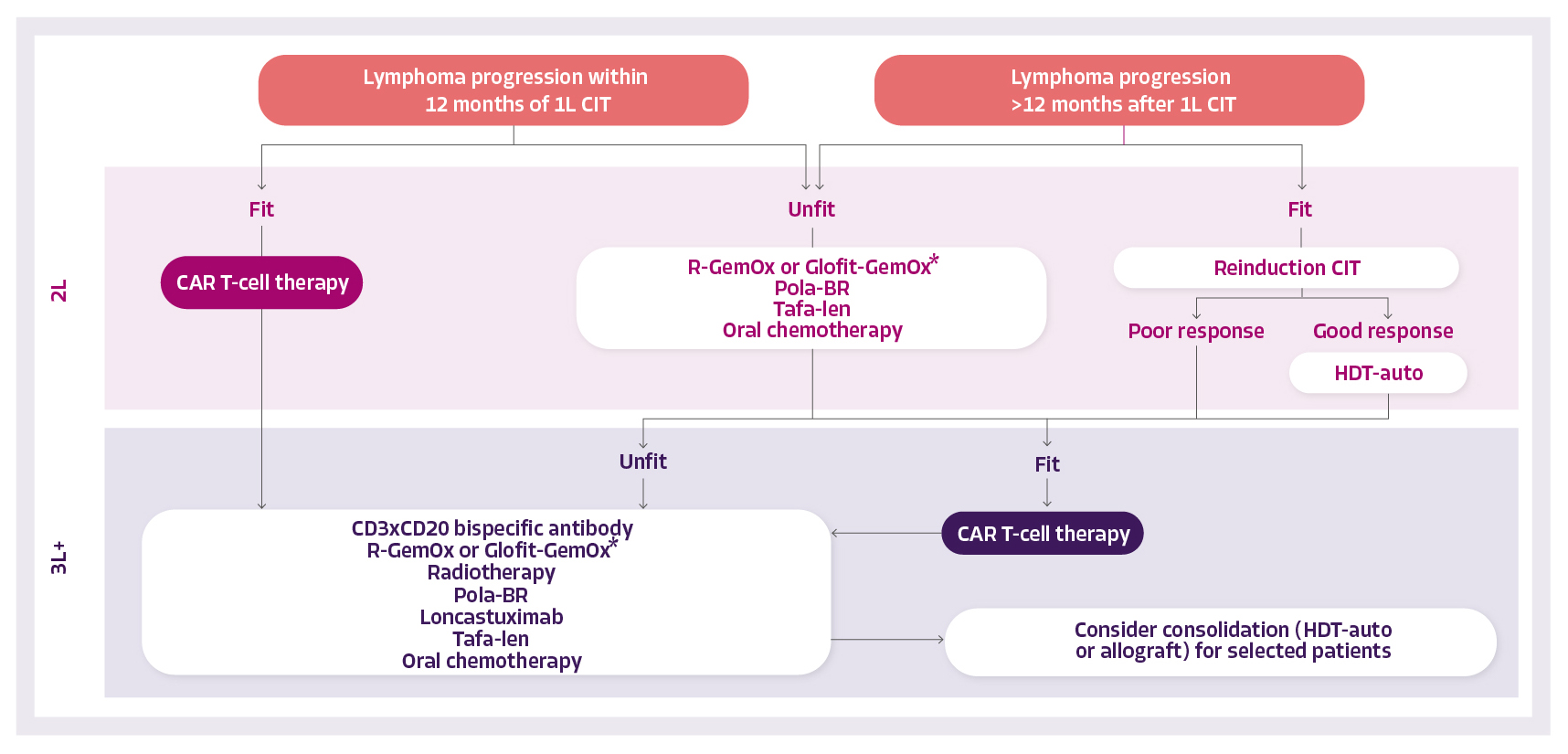
Figure adapted from Chaganti S, et al. Br J Haematol 2025.1
* Glofit-GemOx is recommended, where available, in preference to R-GemOx.
BSH guidelines recommend assessing eligibility and fitness for CAR T-cell therapy and HDT-auto in all patients with R/R LBCL as soon as possible1
Following disease assessment at relapse, BSH recommend restaging with PET-CT1
If you're unsure about a patient's eligibility, please discuss with your YESCARTA® treatment centre
Patient eligibility criteria for YESCARTA® in the real world vs clinical studies
EBMT and EHA recommendations for minimal organ function for CAR T-cell therapy eligibility may be more permissive than criteria used in pivotal clinical studies2,3
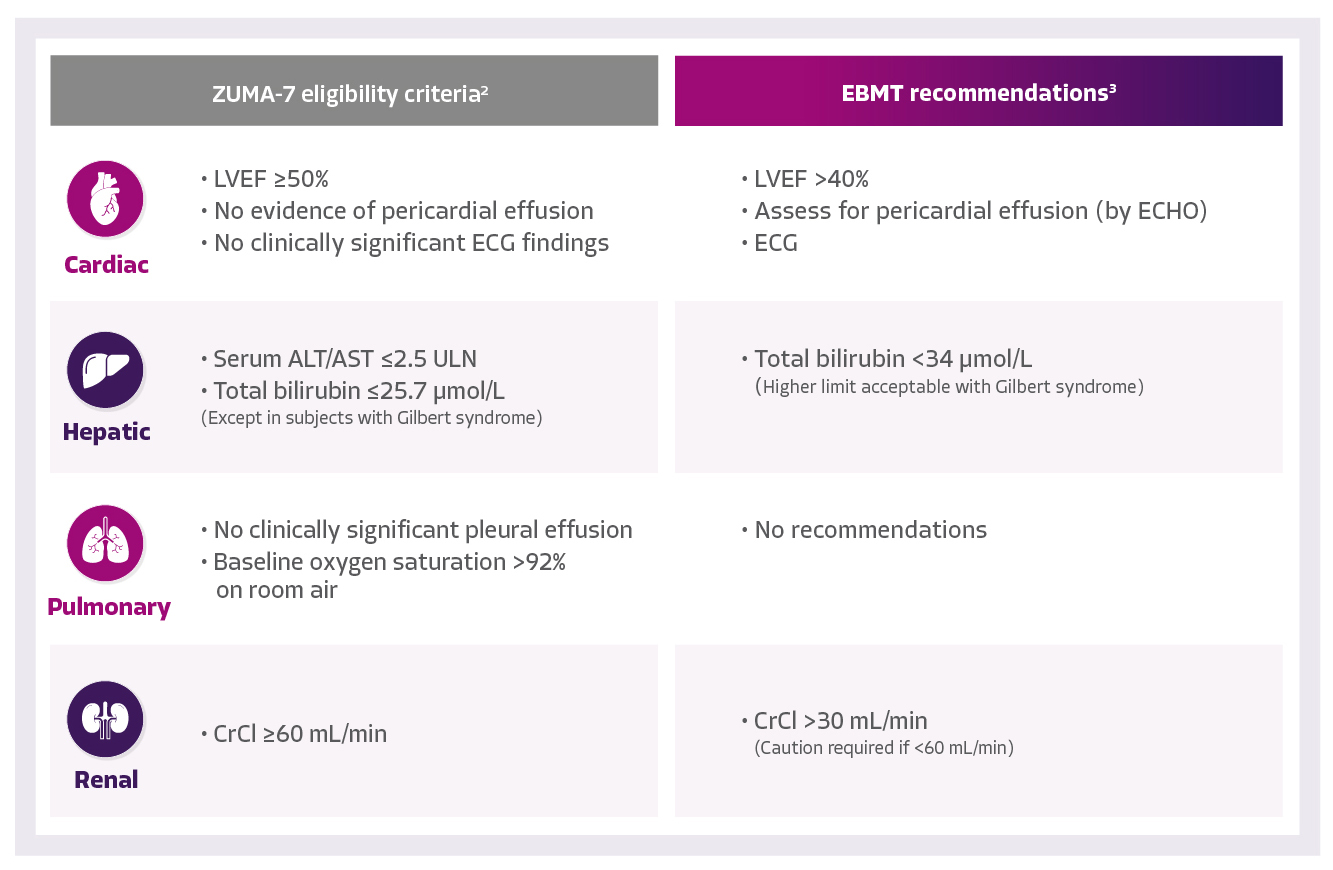
EBMT also recommend that medical history, performance status and CAR T product should be considered with respect to tolerability3
Visit our Efficacy page to learn more about YESCARTA® efficacy outcomes in both clinical studies and the real world.
1L, first-line; 2L, second-line; 3L, third-line; ALT, alanine aminotransferase; AST, aspartate aminotransferase; BSH, British Society for Haematology; CAR T, chimeric antigen receptor T-cell; CD20, cluster of differentiation 20; CD3, cluster of differentiation 3; CIT, chemoimmunotherapy; CMR, complete metabolic response; CrCl, creatine clearance; DLBCL, diffuse large B-cell lymphoma; EBMT, European Society for Blood and Marrow Transplantation; ECG, electrocardiogram; ECHO, echocardiogram; EHA, European Haematology Association; Glofit-GemOx, glofitamab, gemcitabine and oxaliplatin; HDT-auto, high-dose therapy and autologous stem cell transplantation; LBCL, large B-cell lymphoma; LVEF, left ventricular ejection fraction; PET-CT, positron emission tomography-computed tomography; Pola-BR, polatuzumab vedotin, bendamustine, and rituximab; R-GemOx, rituximab, gemcitabine, and oxaliplatin; R/R, relapsed or refractory; Tafa-len, tafasitamab and lenalidomide; ULN, upper limit of normal.
January 2026 UKI-YES-0333